
The mess looked normal until it didn't
At first, it felt manageable. One client used email, another sent comments in Google Docs, someone else marked up a PDF, and a few dropped drive links with zero context. Every client had a different system, and every system became our problem to translate.
Then came the second layer: understanding what they actually wanted. A comment saying "make this pop" could mean layout, content, contrast, spacing, or all of the above. Our designer interpreted one thing, the developer built another, and the client expected a third.
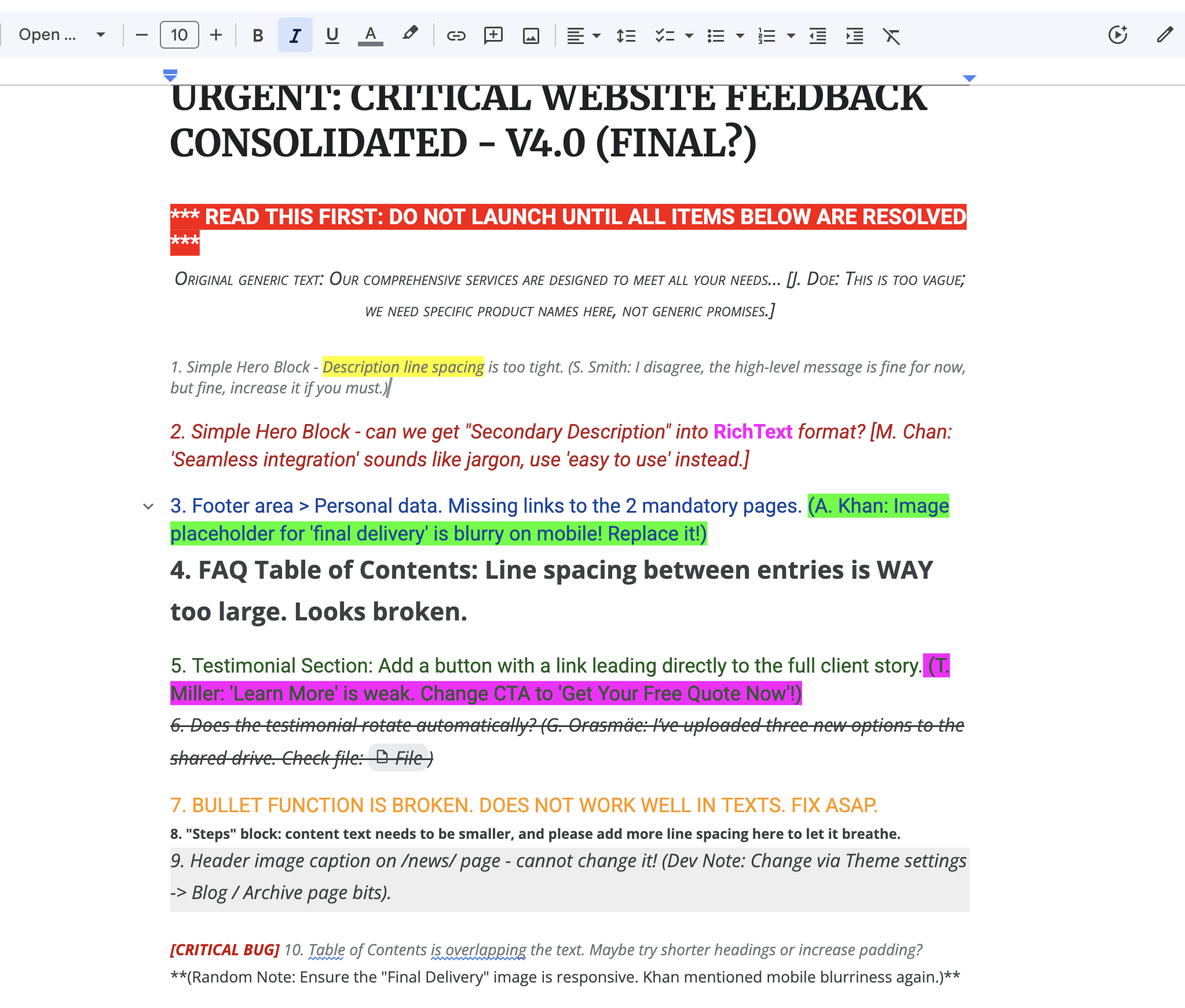
What this chaos cost us
- Lost context - feedback didn't stay attached to the actual page.
- Rework loops - we fixed the wrong thing because the intent wasn't clear.
- Slow rounds - each clarification added another day, sometimes a whole week.
- Team drag - designers and developers spent their energy translating feedback instead of shipping.
The hard part wasn't the effort. Everyone was trying. The hard part was the system itself: we had no shared source of truth.
The turning point
The moment it clicked for me was seeing the exact same issue pop up in three different channels in one week. We weren't failing at communication because we were careless. We were failing because our feedback path made clarity optional.
If feedback isn't tied to a place, a timestamp, and an owner, misunderstanding is guaranteed.
The workflow we moved to
We replaced all those channels with one simple rule: feedback goes on the page, right where the problem is.
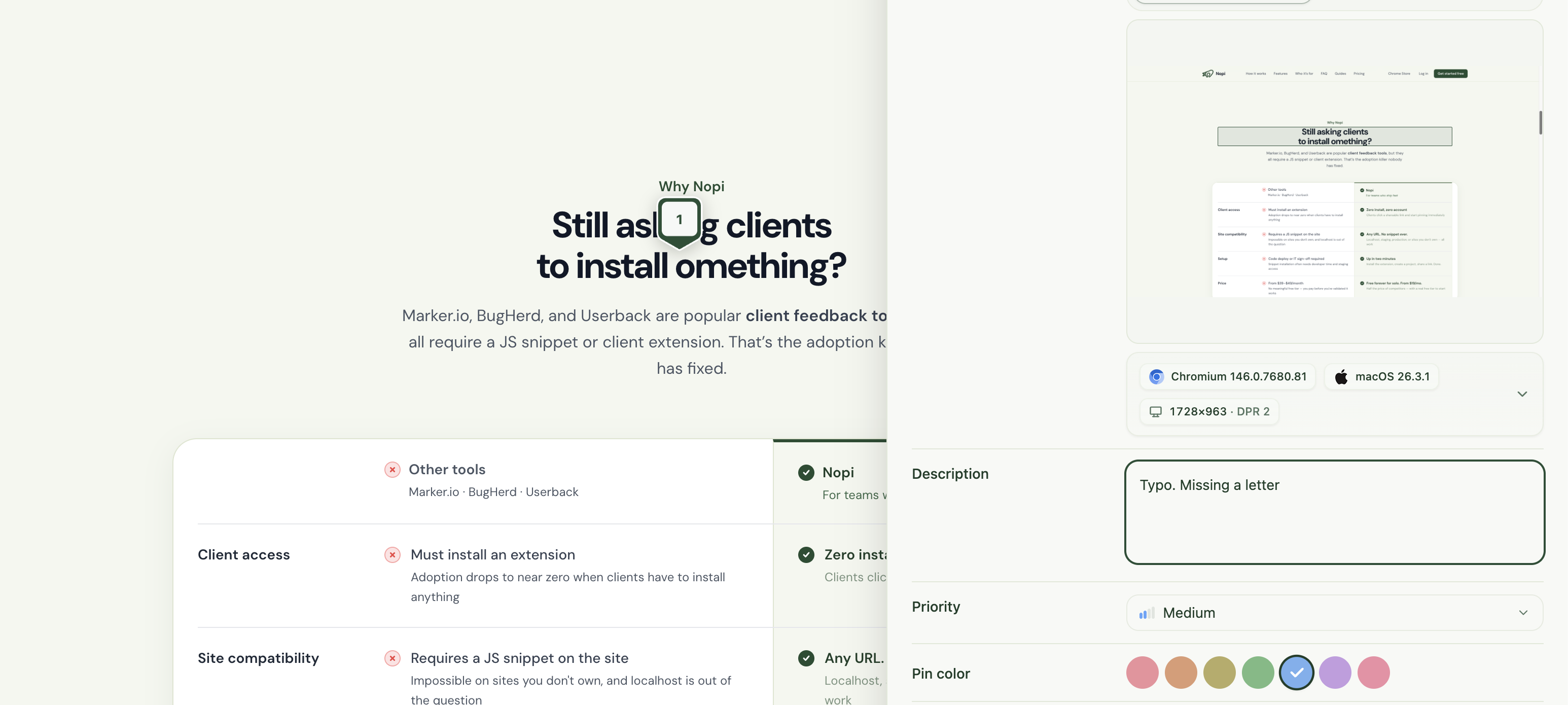
- One review link per round so everyone discusses the same version.
- Pinned visual comments so context is captured at source.
- Clear assignee and status so nothing floats between designer and developer.
- Written round summary of what shipped, what is deferred, and what needs decisions.
Clients still ask for new features and content tweaks, but now those requests arrive in a format we can actually triage and track.
Before vs after
- Before: "The section under the hero feels off" buried in an email thread.
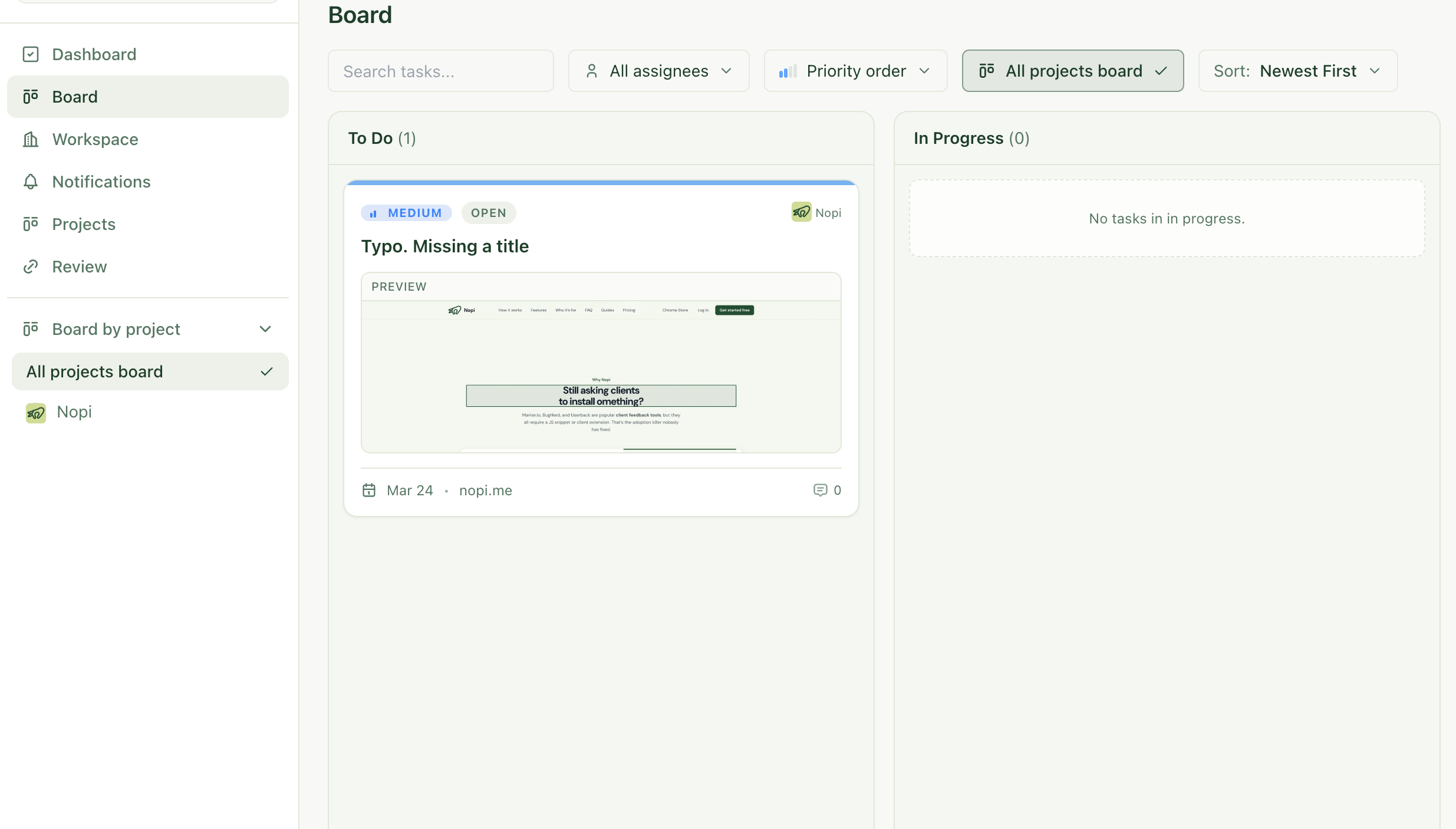
- After: Pin on the exact block: "Increase heading contrast and shorten paragraph to two lines."
- Before: Screenshot from an outdated build with no URL.
- After: Comment anchored to the live staging page with the visible state.
- Before: Forwarded message chain where nobody owns next action.
- After: Item assigned, status tracked, and resolved in one queue.
A lightweight checklist you can use this week
- Start the next milestone by naming one official feedback channel.
- Share one review link and set one feedback deadline.
- Require every request to include location + desired outcome.
- Close each round with a written "done / deferred / decide" summary.
Why I'm sharing this
I'm sharing this because the pain is incredibly common and expensive, especially for agencies and small product teams. You don't need a heavyweight process to fix it. You just need one feedback lane that keeps context attached to every request.
That's exactly why we built Nopi: visual feedback pinned directly on the page for your team, with a simple link flow for your clients.